· Music Theory · 4 min read
Harmonic Minor Scale on Guitar - Structure and Applications
Discover the secrets of the harmonic minor scale, its structure, applications, and how to use it in your musical compositions.
The Harmonic Minor Scale: A Complete Guide
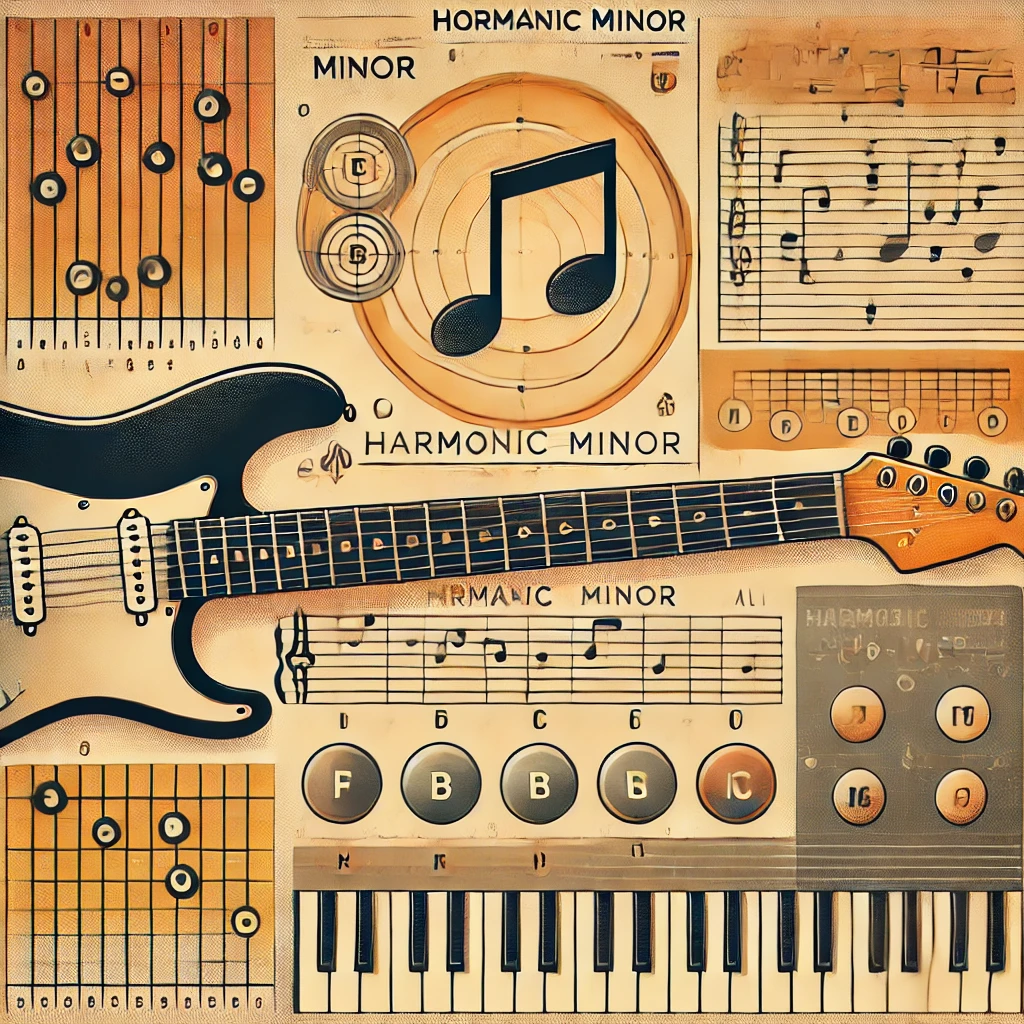
The harmonic minor scale is one of the most fascinating and versatile scales in music. Its characteristic sound makes it especially attractive in various genres, from classical music to modern metal.
Scale Structure
Interval Formula
1 - 2 - ♭3 - 4 - 5 - ♭6 - 7 - 8Example in A Harmonic Minor
A  - B  - C  - D  - E  - F  - G# - A
1    2    ♭3   4    5    ♭6   7    8
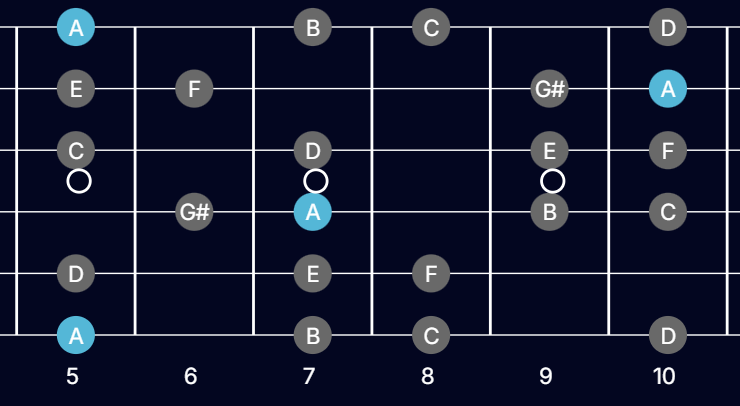
Distance Between Notes
Whole - Half - Whole - Whole - Half - Whole and Half - HalfDistinctive Characteristics
- Major Seventh: Unlike the natural minor scale, the harmonic minor has a major seventh.
- Characteristic Interval: Augmented second between the sixth and seventh degrees.
- Harmonic Tension: The major seventh creates a strong resolving tendency towards the tonic.
Derived Chords
Triads
I°    - A minor
II°   - B diminished
III+  - C augmented
IV    - D minor
V     - E major
VI    - F major
VII°  - G# diminished
Seventh Chords
Im(maj7)   - A minor major seventh
IIm7♭5    - B half-diminished
IIImaj7#5  - C augmented major
IVm7      - D minor seventh
V7        - E dominant
VImaj7    - F major seventh
VII°7     - G# diminished
Practical Applications
1. In Classical Music
- Perfect cadences (V7 - Im)
- Characteristic harmonic progressions
- Melodies with dramatic tension
2. In Jazz
Common progressions:
- Im - V7 - Im
- IIm7♭5 - V7 - Im
- Im - IVm - V7 - Im
3. In Metal
- Riffs with augmented second
- Solos with harmonic tension
- Dark and dramatic progressions
Modes of the Harmonic Minor Scale
- Harmonic Minor: A - B - C - D - E - F - G# - A
- Locrian ♮6: B - C - D - E - F - G# - A - B
- Ionian #5: C - D - E - F - G# - A - B - C
- Dorian #4: D - E - F - G# - A - B - C - D
- Mixolydian ♭9 ♭13: E - F - G# - A - B - C - D - E
- Lydian #2: F - G# - A - B - C - D - E - F
- Superlocrian ♭♭7: G# - A - B - C - D - E - F - G#
Deep Dive: The 5th Mode (Phrygian Dominant)
The fifth mode of the harmonic minor scale is a cornerstone of guitar improvisation. Depending on the musical context, you will find it under two different names: Mixolydian ♭9 ♭13 or Phrygian Dominant.
Why Two Names?
- Mixolydian ♭9 ♭13 (The Jazz Perspective): Viewed as a standard Mixolydian scale (1 - 2 - 3 - 4 - 5 - 6 - ♭7) with altered tensions. This naming helps jazz players understand how the scale functions over a V7 chord that resolves to a minor tonic (Im).
- Phrygian Dominant (The Metal & Flamenco Perspective): Viewed as a Phrygian mode (1 - ♭2 - ♭3 - 4 - 5 - ♭6 - ♭7) but with a Major Third. This name highlights the exotic, dark, and “Spanish” sound often used in neoclassical metal.
Technical Comparison
| Degree | Phrygian (Natural Minor) | Phrygian Dominant |
|---|---|---|
| 1 | Tonic | Tonic |
| 2 | ♭2 | ♭2 (♭9) |
| 3 | ♭3 (Minor) | 3 (Major) |
| 4 | 4 | 4 |
| 5 | 5 | 5 |
| 6 | ♭6 | ♭6 (♭13) |
| 7 | ♭7 | ♭7 |
Guitarist’s Tip: The “Exotic” Gap
The defining characteristic of this mode is the Augmented Second interval between the 2nd and 3rd degrees (e.g., between F and G# in E Phrygian Dominant). On the fretboard, this is a 3-fret stretch that gives the scale its aggressive and tension-filled personality, perfect for shredding on your Ibanez RGT.
Examples in Different Genres
Classical Music
- “Concierto de Aranjuez” - Joaquín Rodrigo
- “Für Elise” - Ludwig van Beethoven
- “Hungarian Dance No. 5” - Johannes Brahms
Metal and Rock
- “Symphony of Destruction” - Megadeth
- “Enter Sandman” - Metallica
- “Black Magic” - Slayer
Jazz
- “Autumn Leaves” (minor versions)
- “Blue Bossa” - Kenny Dorham
- “Caravan” - Duke Ellington
Improvisation Techniques
1. Over II-V-I Progressions
Progression in Am:
Bm7♭5 - E7 - Am
2. Melodic Patterns
1-3-5-7
3-5-7-8
7-5-3-1
3. Combination with Other Scales
- Natural minor
- Melodic minor
- Minor pentatonic
- Phrygian dominant
Study Tips
-
Slow Practice
- Start at 60 BPM
- Gradually increase speed
- Always use a metronome
-
Visualization
- Learn patterns in all positions
- Identify characteristic notes
- Relate to chords
-
Musical Application
- Transcribe solos that use it
- Compose your own melodies
- Improvise over progressions
Conclusion
The harmonic minor scale is a fundamental tool in the musical vocabulary. Its distinctive sound and versatility make it indispensable across multiple genres. Constant practice and experimentation with its different applications will help you effectively incorporate it into your music.
Additional Resources
Practice with the Scale Generator
Ready to master the Harmonic Minor scale and elevate your guitar playing? Head to the guitart Scale Generator and start practicing. You can experiment with Harmonic Minor scales in any key and even customize them for different tunings.
Recommended Books
- “Jazz Theory” - Mark Levine
- “Harmonic Minor Revealed” - Frank Gambale
- “Classical Harmony” - Walter Piston
Remember that mastering the harmonic minor scale requires time and consistent practice. Start with simple exercises and gradually increase complexity as you become comfortable with each level.