· Music Theory · 5 min read
The Phrygian Dominant Mode - The Scale of Flamenco
Explore the Phrygian dominant mode, the characteristic scale of flamenco and Arabic music. Discover its unique features, harmonic tensions.
The Phrygian Dominant Mode - The Scale of Flamenco
The Phrygian dominant mode is one of the most fascinating and expressive scales in music. Also known as the Andalusian scale or the fifth mode of the harmonic minor scale, this mode is fundamental in flamenco and Arabic music.
What is the Phrygian Dominant Mode?
The Phrygian dominant mode is built starting from the fifth degree of the harmonic minor scale. Its most distinctive feature is the combination of:
- A half step between the first and second degrees (like the Phrygian mode)
- A major third (like the major scale)
- A minor seventh
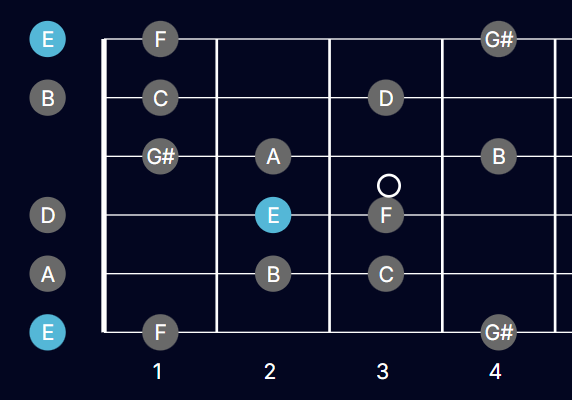
For example, in E Phrygian dominant, the notes would be:
E - F - G# - A - B - C  - D
1 - b2 - 3 - 4 - 5 - b6 - b7
Relationship with the Harmonic Minor Scale
The Phrygian dominant mode is closely related to the harmonic minor scale. In fact, it is its fifth mode. To understand it better:
The A harmonic minor scale:
A - B - C - D - E - F - G# - AStarting from E (the fifth degree), we get the Phrygian dominant mode:
E - F - G# - A - B - C - D - EThis relationship explains why the Phrygian dominant mode:
- Has a major third (G#)
- Maintains the characteristic tension of the harmonic minor scale
- Shares the same collection of notes with its parent scale
Historical and Cultural Background
Although commonly explained through Western music theory, the Phrygian dominant sound is much older than the harmonic minor system.
- In Arabic music, it closely resembles Maqam Hijaz
- In Spanish flamenco, it became a defining element during the Moorish influence in Andalusia
- In Mediterranean and Middle Eastern music, it is associated with lament, devotion, and intensity
The scale entered Western classical and popular music through cultural exchange rather than academic theory.
Sonic Characteristics
What makes the Phrygian dominant mode unique is:
- The immediate tension created by the half step between the first and second degrees
- The augmented second interval between the second and third degrees
- Its exotic and Eastern sound
Practical Applications
In Flamenco
- Harmonic foundation for styles like bulería and soleá
- Creation of Andalusian cadences
- Improvisation over flamenco progressions
In Other Genres
- Progressive metal
- Jazz fusion
- Mediterranean and Arabic music
Chords Derived from the Phrygian Dominant Mode
Using E Phrygian dominant as reference:
| Degree | Chord |
|---|---|
| I | E7 |
| bII | F major |
| III | G# diminished |
| iv | Am |
| v | B diminished |
| bVI | C major |
| bVII | D minor |
The tonic chord is typically treated as E7, reinforcing the dominant character of the mode.
Common Progressions
The most characteristic progressions in the Phrygian dominant mode are:
- i - ♭II - i
- i - ♭II - ♭vii - i
- i - iv - ♭III - ♭II
Tips for Usage
- Emphasize the half step between the first and second degrees
- Use the major third as a tension note
- Experiment with arpeggios that include the minor seventh
- Combine with flamenco pentatonic scales
Examples in Popular Music
Flamenco and Spanish Music
”Entre Dos Aguas” - Paco de Lucía
- Key: E Phrygian dominant
- Main progression: Em - F - Em (i - ♭II - i)
- Characteristic use of the Em7 arpeggio with the major third (G#)
- The melody emphasizes the augmented second interval (F to G#)
“Volare” - Gipsy Kings
- Key: A minor Phrygian dominant
- Progression: Am - B♭ - Am (i - ♭II - i)
- Use of the Andalusian cadence in the verses
- The melody utilizes the major third (C#) as a tension note
”Mediterranean Sundance” - Al Di Meola
- Key: E minor Phrygian dominant
- Progression: Em7 - F - G - F (i7 - ♭II - ♭III - ♭II)
- Combination of Phrygian dominant and harmonic minor scales
- Rapid arpeggios that highlight the major third
Rock and Metal
”Misirlou” - Dick Dale
- Key: E minor Phrygian dominant
- Main riff based on the Phrygian dominant scale
- Use of tremolo picking over the notes E - F - G# - A
- The progression Em - F - Em emphasizes the characteristic half step
”Symphony of Destruction” - Megadeth
- Key: E minor Phrygian dominant
- Main riff: Em - F - Em with emphasis on G#
- Use of power chords with the added major third
- Solos that exploit the augmented second interval
”Wherever I May Roam” - Metallica
- Key: E minor Phrygian dominant
- Intro with sitar emphasizing the Eastern sound
- Main riff based on the Phrygian dominant scale
- Progression: Em - F - G - F with chromatic variations
Arabic Music and Fusion
”Desert Rose” - Sting ft. Cheb Mami
- Key: D minor Phrygian dominant
- Mix of Western progressions with Arabic maqam
- Use of the scale in Arabic vocal melodies
- Emphasis on the interval F# - E♭ (major third to minor second)
“Ya Rayah” - Rachid Taha
- Key: B minor Phrygian dominant
- Traditional use of the maqam hijaz
- Vocal melody exploiting characteristic intervals
- Progression: Bm - C - Bm with modal ornamentations
Jazz Fusion
”Spain” - Chick Corea
- Key: E minor Phrygian dominant in sections
- Use of extended chords over the scale
- Improvisations combining Phrygian dominant with bebop
- Complex modal progressions including ii-V-i in Phrygian
Conclusion
The Phrygian dominant mode is a powerful tool for adding color and exoticism to your compositions. Its versatility makes it ideal for both traditional music and contemporary fusions.
Practical Exercises
- Practice the scale ascending and descending
- Create melodies using only the notes of the scale
- Experiment with chord progressions based on the mode
- Try improvising over a Phrygian dominant harmonic base
- Compare the sound with the original harmonic minor scale
- Practice transitions between both scales to understand their relationship
To make this easier, try it directly in the Guitar Scale Generator:
👉 https://guitart.blog/guitar-scale-generator
You can visualize the scale across the fretboard, switch keys instantly, and experiment with different tonal centers without guessing.
Remember, the best way to internalize this mode is to listen to plenty of flamenco and Arabic music, where this sound is fundamental. Consistent practice and exposure to different genres that utilize this scale will help you naturally incorporate it into your musical vocabulary.